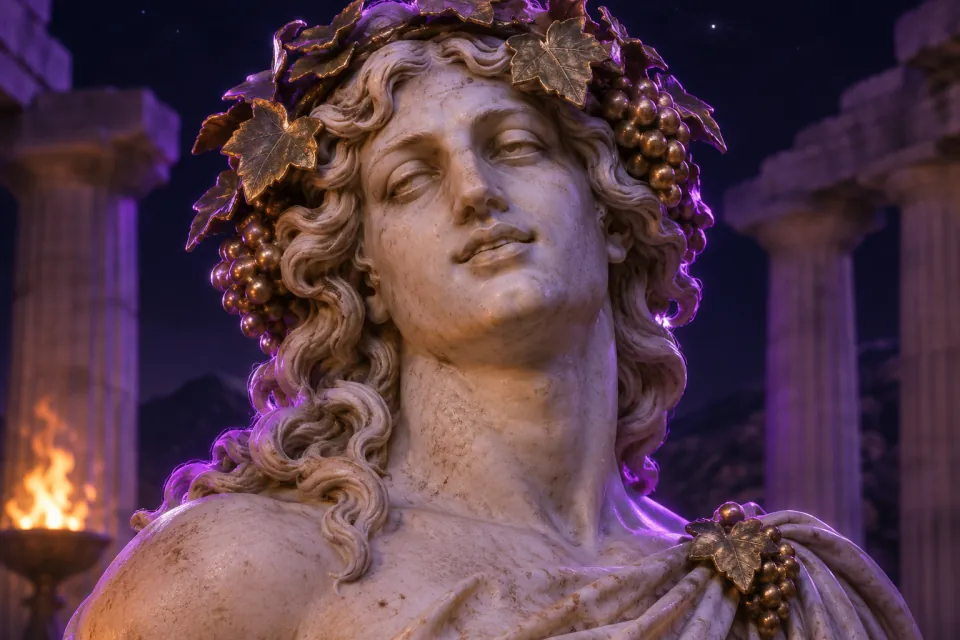
Διόνυσος
Dionysus狄俄尼索斯
Roman name Bacchus
God of wine · Revelry, theatre and release
WineEcstasyTheatreRebirth
Meet Dionysus in the 3D temple ›Origins
Son of Zeus and the Theban princess Semele — the only one of the twelve with a mortal mother. Hera goaded Semele into asking Zeus to appear in his true form; no mortal could bear the thunder, and she burned to ash. Zeus saved the unborn child and sewed him into his own thigh until he came to term, which is why Dionysus is called "twice-born."
Sacred symbols
GrapevineThyrsusLeopardIvy
Myths
Pirates into dolphins
Pirates took him for a rich prince and dragged him aboard for ransom. Vines climbed the mast, he turned into a lion, and the terrified crew leapt overboard — every one of them became a dolphin.
The death of Pentheus
Pentheus, king of Thebes and his own cousin, outlawed his worship. Dionysus lured him into dressing as a woman to spy on the maenads' rites, where his own mother, in her frenzy, took him for a lion and tore him to pieces.
Ariadne's crown
Theseus abandoned Ariadne on Naxos after she had helped him out of the labyrinth. Dionysus married her and threw her wedding crown into the night sky, where it became the Corona Borealis.
Did you know
Greek tragedy and comedy both began at his festival in Athens — Western theatre grew out of the choruses sung in his honour.
Relationships with the other gods
KinZeus
The child in his thigh
As Semele burned, Zeus snatched the six-month child from the flames, sewed it into his own thigh and delivered it when its time came. Having given birth to this son himself, he later brought the half-mortal up to Olympus as one of the twelve.
FeudHera
Hunting the bastard son
First she tricked Semele to her death; then she drove mad the family of Ino, who took the baby in; and when Dionysus was grown she sent madness on him too, so that he wandered Egypt and Syria until the Great Mother cured him.
RivalryApollo
Apollonian and Dionysian
One is reason, order and clarity; the other intoxication, chaos and ecstasy. Yet they shared one sanctuary at Delphi: each winter Apollo travelled north and the temple belonged to Dionysus. Two thousand years later Nietzsche used the "Apollonian" and the "Dionysian" to explain all of Greek art.
AllianceHephaestus
A homecoming bought with wine
With Hera locked in the golden throne, Ares tried to drag Hephaestus back by force and was driven off with firebrands. Dionysus tried another way — no weapons, just wine — and led the drunken smith back to Olympus on a donkey, singing all the way.
AllianceHermes
Entrusted in swaddling clothes
When the infant Dionysus was delivered from Zeus's thigh, it was Hermes who carried him from one hiding place to another to keep him from Hera, and finally gave him to the nymphs of Mount Nysa to raise. The famous Greek statue "Hermes and the Infant Dionysus" shows exactly this.