ΟΛΥΜΠΟΣThe Twelve Olympians

Greek Mythology: Who’s Who

Short entries on 76 Titans, primordial gods, heroes and mortals of Greek myth — Cronus, Gaia, Prometheus, Achilles, Perseus and more.
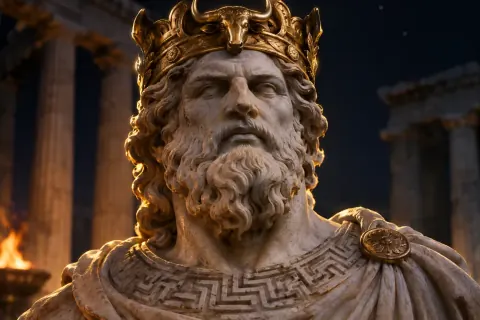
Cronus

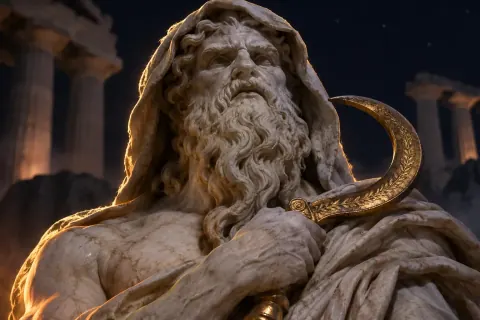
Cronus克洛诺斯

King of the Titans · father of Zeus

Youngest son of Uranus and Gaia. He castrated his father with a sickle to seize the throne, then swallowed each of his own children for fear of the same fate — and was overthrown by his youngest, Zeus, and cast into Tartarus.

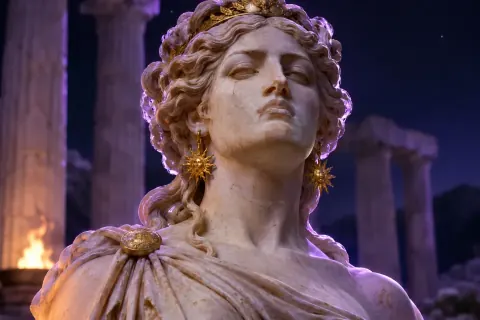
Rhea

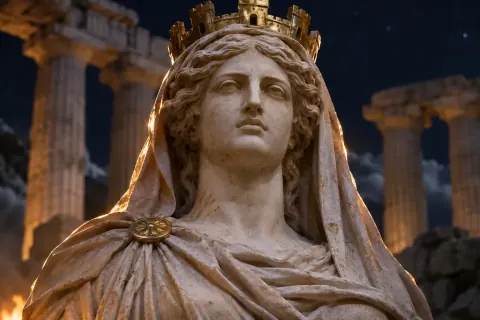
Rhea瑞亚

Titaness · mother of the gods

Sister and wife of Cronus, and mother of Hestia, Demeter, Hera, Hades, Poseidon and Zeus. She saved the infant Zeus by giving Cronus a stone instead.

Uranus

Uranus乌拉诺斯

Primordial god of the sky

Son and husband of Gaia and father of the Titans. He imprisoned his children inside the earth, and lost his power when his son Cronus castrated him with a sickle.

Gaia

Gaia盖亚

The Earth · mother of all

One of the first beings to emerge from Chaos. Sky, mountains, sea and the Titans were all her children, and she had a hand in nearly every coup among the gods.
Titans

Titans提坦神族

The generation of gods before Zeus

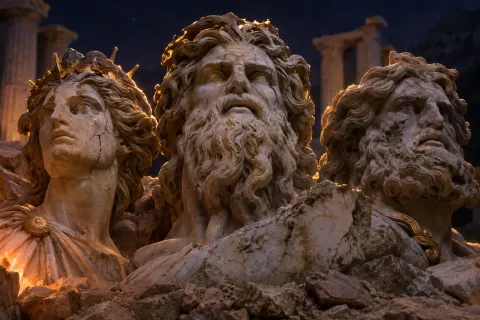
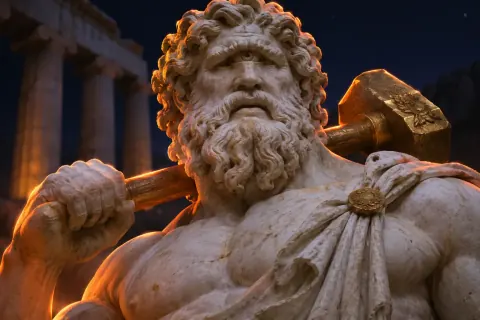
The twelve mighty children of Uranus and Gaia, ruled by Cronus. They lost the ten-year Titanomachy to Zeus and his siblings, and most were locked in Tartarus.

Cyclopes

Cyclopes独眼巨人

One-eyed giants

The first three Cyclopes were sons of Gaia and master smiths who forged Zeus's thunderbolt and Poseidon's trident. The Cyclopes of later tales, like Polyphemus, are savage shepherds.
Hundred-Handers

Hundred-Handers百臂巨人

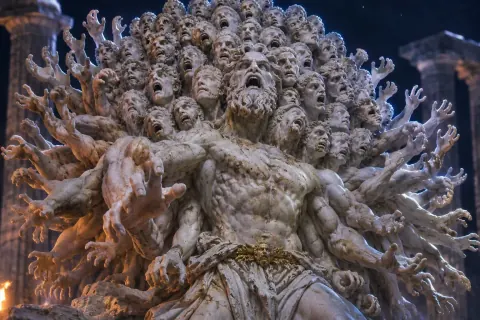
Giants with fifty heads and a hundred hands

Three sons of Gaia and Uranus. They hurled boulders for Zeus in the war with the Titans and afterwards stood guard at the gates of Tartarus.

Tartarus

Tartarus塔耳塔洛斯

The deepest pit beneath the earth

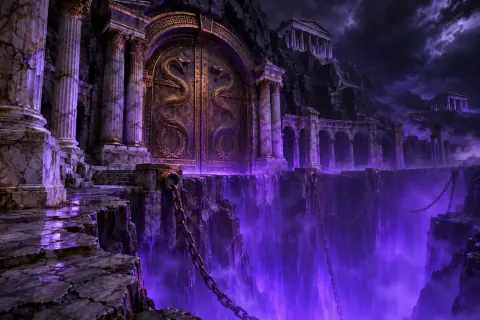
A prison far below even the underworld — an anvil dropped from earth was said to fall nine days and nights to reach it. The defeated Titans were confined here.
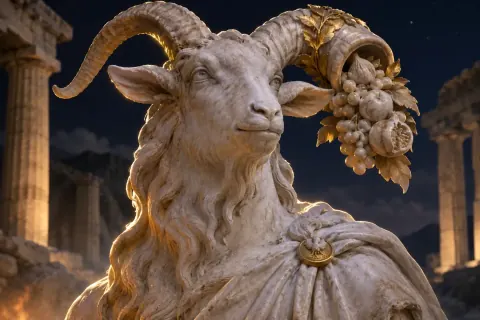
Amalthea

Amalthea阿玛尔忒亚

The goat that nursed Zeus

She suckled the infant Zeus in a cave on Crete. One of her horns, broken off, is said to have become the inexhaustible cornucopia.
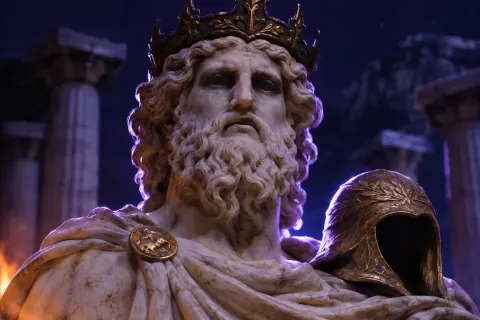
Hades

Hades哈迪斯

Lord of the underworld · brother of Zeus

He drew the underworld by lot and rules the dead. He owns a helmet of invisibility and rarely leaves his kingdom, which is why he is not usually counted among the twelve Olympians.
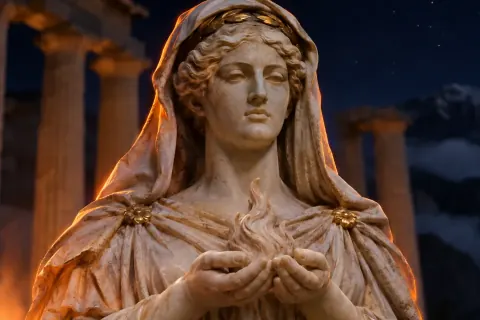
Hestia

Hestia赫斯提亚

Goddess of the hearth · eldest sister of Zeus

Eldest child of Cronus. She never married, and keeps the hearth of every home and the sacred fire of Olympus. A popular story says she gave up her seat among the twelve to Dionysus.

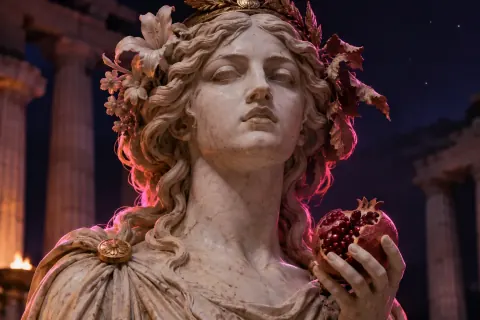
Persephone

Persephone珀耳塞福涅

Queen of the underworld · daughter of Demeter

Daughter of Zeus and Demeter, carried off by Hades to be his wife. Having eaten pomegranate seeds below, she moves each year between the underworld and the earth, and the seasons follow her.

Metis

Metis墨提斯

Goddess of cunning wisdom · mother of Athena

A Titaness and Zeus's first wife. Because it was foretold her child would surpass its father, Zeus swallowed her while she was pregnant — and so Wisdom has lived inside him ever since.

Leto

Leto勒托

Titaness · mother of Apollo and Artemis

Pregnant with twins by Zeus, she was hounded by Hera until no land would take her in, and at last gave birth on the floating island of Delos.

Maia

Maia迈亚

Mountain nymph · mother of Hermes

Eldest of the seven Pleiades, who lived in a cave on Mount Cyllene. The month of May is said to be named for her.
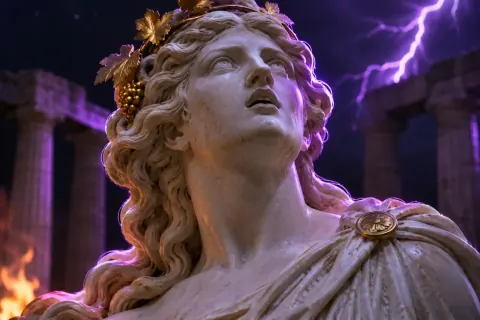
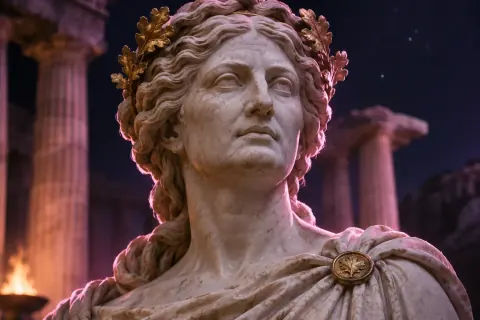
Semele

Semele塞墨勒

Princess of Thebes · mother of Dionysus

A mortal lover of Zeus. Tricked by Hera into asking to see him in his true form, she was burned to ash by his lightning. Dionysus later fetched her from the underworld up to Olympus.

Dione

Dione狄俄涅

A Titaness

In Homer's version she is the mother of Aphrodite, and it is into her lap that Aphrodite falls weeping after being wounded at Troy.

Thetis

Thetis忒提斯

Sea-nymph · mother of Achilles

She sheltered the cast-out Hephaestus and once freed Zeus from his bonds. Because her son was fated to be greater than his father, the gods dared not marry her and gave her to the mortal Peleus.
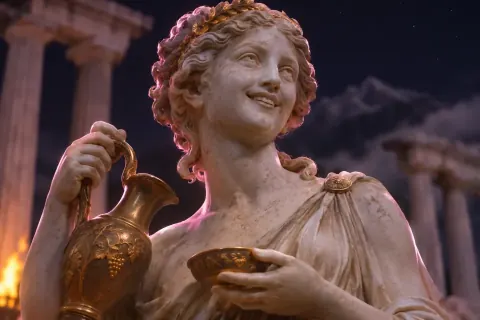
Hebe

Hebe赫柏

Goddess of youth

Daughter of Zeus and Hera and cupbearer at the feasts of the gods; she later married the deified Heracles.

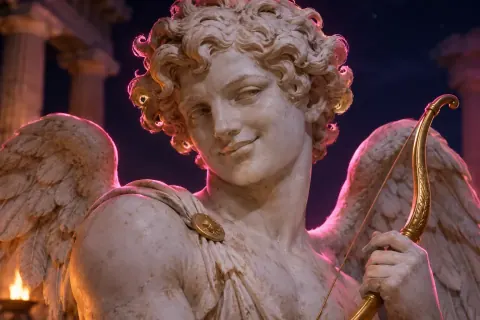
Eros

Eros厄洛斯

God of love

A winged boy with a bow, often called the son of Aphrodite and Ares. His golden arrows kindle love and his leaden ones revulsion. The Romans called him Cupid.

Strife

Strife不和女神

Eris · strife personified

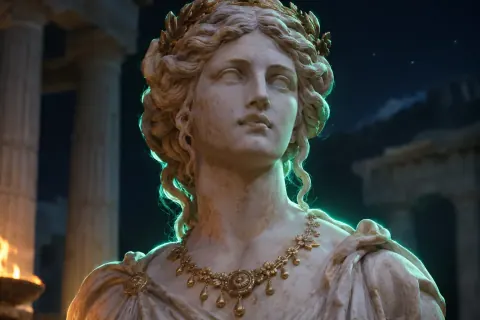
Every god was invited to the wedding of Thetis except her — so she tossed a golden apple inscribed "for the fairest" among the guests.
Helios

Helios太阳神

Helios · the Titan who drives the sun

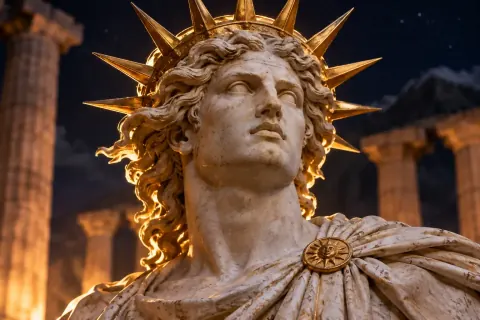
He drives a four-horse chariot across the sky each day and sees everything — it was he who reported Aphrodite's affair. Later ages often merged him with Apollo.

Harmonia

Harmonia哈耳摩尼亚

Goddess of harmony

Daughter of Ares and Aphrodite, married to Cadmus, founder of Thebes. Her wedding necklace brought a long run of disasters on those who inherited it.

Phobos

Phobos福波斯

Fear

Son of Ares and Aphrodite, who rides into battle beside his father. The word "phobia" comes from his name.

Deimos

Deimos得摩斯

Dread

Twin of Phobos, likewise a son of Ares and his attendant in battle.

Hermaphroditus

Hermaphroditus赫耳玛佛洛狄托斯

Child of Hermes and Aphrodite

A beautiful youth to whom the nymph Salmacis clung, praying never to be parted; the two were fused into one body of both sexes.
Asclepius

Asclepius阿斯克勒庇俄斯

God of medicine · son of Apollo

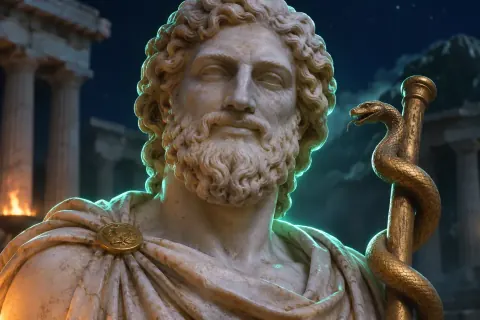
Trained by the centaur Chiron, he grew so skilled he could raise the dead, for which Zeus struck him down; he was later made a god. His single-snake staff is still the emblem of medicine.
Prometheus

Prometheus普罗米修斯

The Titan who stole fire

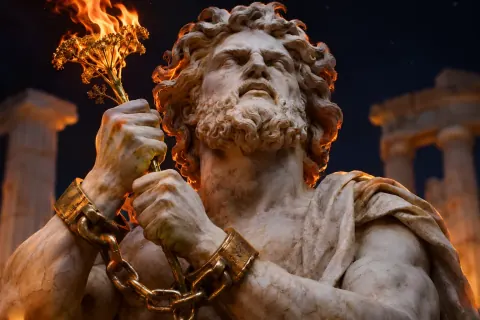
He stole fire from heaven for humankind. Zeus chained him in the Caucasus, where an eagle ate his liver every day, until Heracles set him free.

Pandora

Pandora潘多拉

The first woman

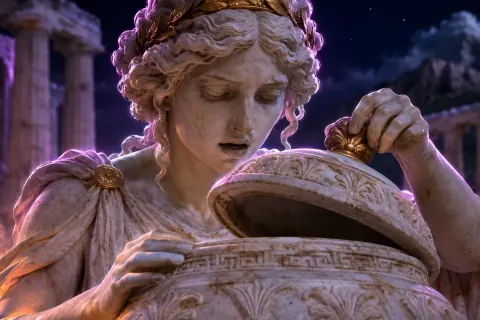
Each god gave her a gift — her name means "all-gifted." She opened the jar she should not have, releasing every evil into the world; only Hope stayed inside.
Heracles

Heracles赫拉克勒斯

Greatest of heroes · son of Zeus

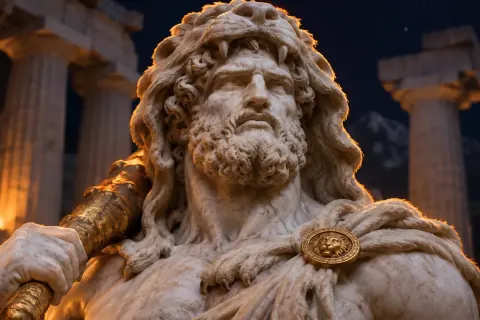
Son of Zeus and the mortal Alcmene, of boundless strength. He performed twelve labours to atone for killing his wife and children, and after death became a god on Olympus. The Romans called him Hercules.
Perseus

Perseus珀尔修斯

The hero who killed Medusa

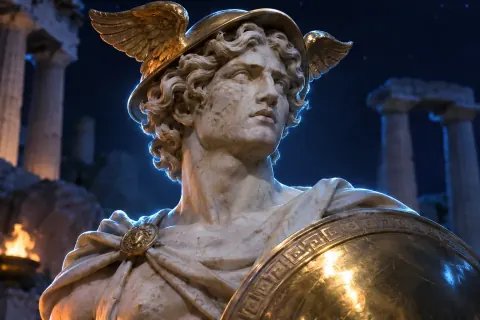
Son of Danaë by Zeus's shower of gold. With gifts from the gods he beheaded Medusa, and on the way home rescued the princess Andromeda from a sea-monster.

Helen

Helen海伦

The most beautiful woman in the world

Daughter of Zeus and Leda and queen of Sparta. Paris took her to Troy, and the Greeks fought ten years to get her back.

Leda

Leda勒达

Queen of Sparta

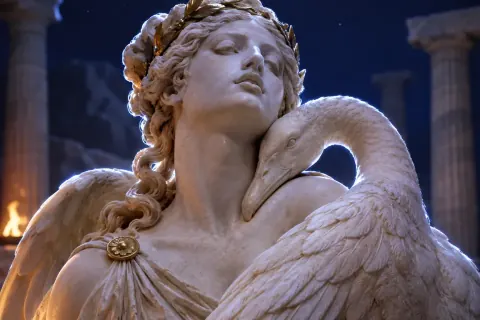
Zeus came to her as a swan. From the eggs she laid hatched Helen and the twin heroes Castor and Polydeuces.

Europa

Europa欧罗巴

Phoenician princess

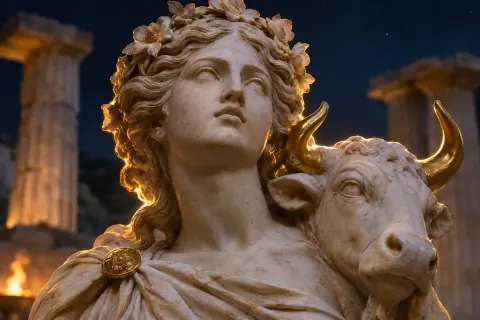
Zeus, as a white bull, carried her across the sea to Crete, where she bore Minos. The continent of Europe is named after her.

Danaë

Danaë达那厄

Princess of Argos · mother of Perseus

Her father, told that her son would kill him, shut her in a bronze tower. Zeus reached her as a shower of gold through the roof.
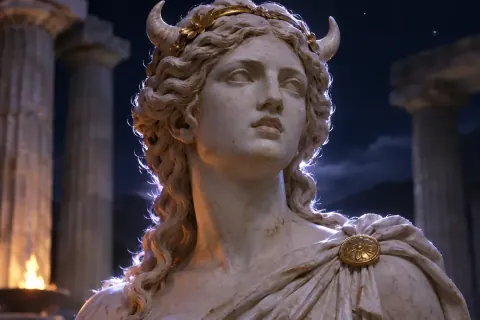
Io

Io伊娥

Priestess of Hera · lover of Zeus

Turned into a white cow, then chased across the world by a gadfly sent by Hera, until she regained human form in Egypt. Jupiter's moon Io is named after her.
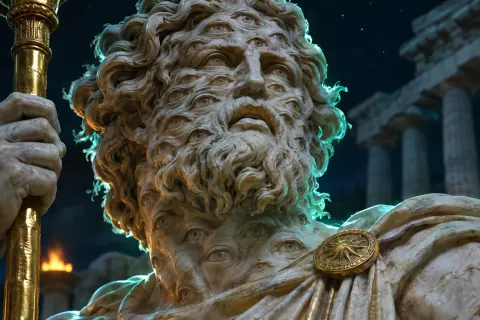
Argus

Argus阿耳戈斯

The hundred-eyed giant

His body was covered with a hundred eyes, some always open even in sleep — the perfect watchman, until Hermes lulled every one of them shut.
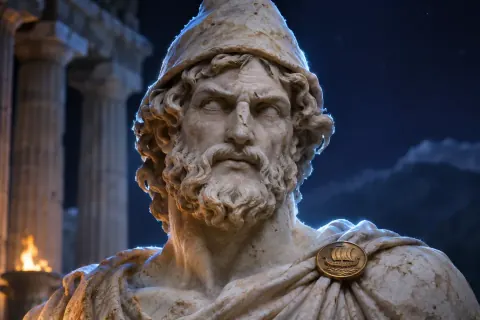
Odysseus

Odysseus奥德修斯

King of Ithaca · the cunning hero

The mind behind the Trojan Horse. After the war he wandered the sea for ten more years before reaching home — the journey told in the Odyssey.
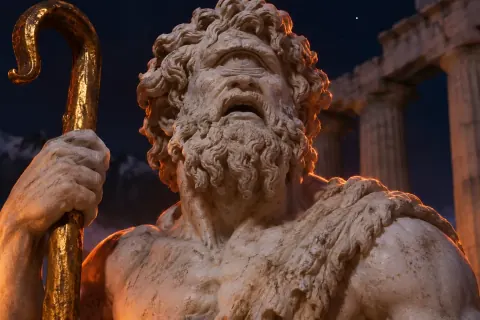
Polyphemus

Polyphemus波吕斐摩斯

A Cyclops · son of Poseidon

A shepherd giant living in a cave. He ate several of Odysseus's men, was made drunk, and had his single eye put out with a burning stake.
Minos

Minos弥诺斯

King of Crete

Son of Zeus and Europa. He had Daedalus build the labyrinth to hold the Minotaur, and after death became a judge in the underworld.

Pasiphaë

Pasiphaë帕西淮

Queen of Crete

Daughter of Helios and wife of Minos. Cursed by Poseidon to desire a bull, she gave birth to the Minotaur.

Minotaur

Minotaur弥诺陶洛斯

The bull-headed monster

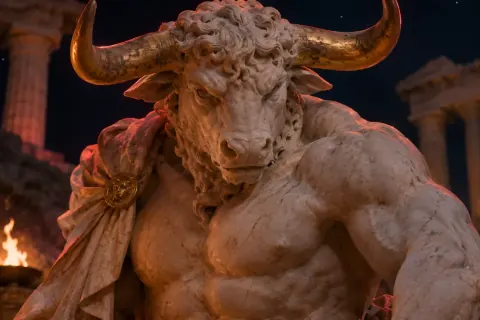
Kept in the labyrinth of Crete and fed on the youths and maidens Athens sent as tribute, until Theseus killed it.
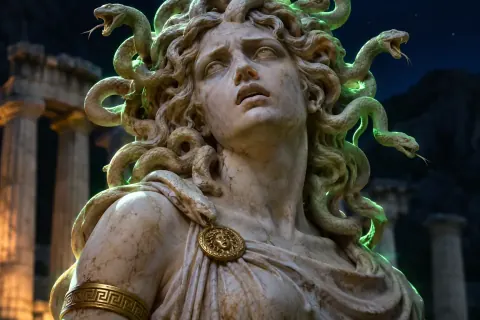
Medusa

Medusa美杜莎

The snake-haired Gorgon

The only mortal one of the three Gorgons; anyone who met her eyes turned to stone. Perseus cut off her head.
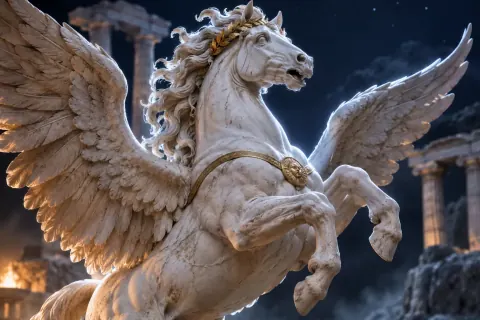
Pegasus

Pegasus珀伽索斯

The winged horse

Child of Poseidon and Medusa, born from her severed neck. Tamed by the hero Bellerophon, he ended as the bearer of Zeus's thunderbolts.

Arachne

Arachne阿拉克涅

A weaver of Lydia

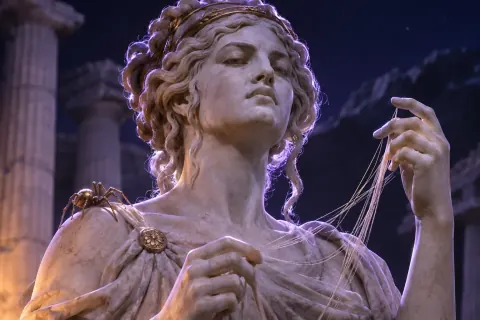
A mortal of dazzling skill who dared to challenge Athena. Spiders and their kin — the arachnids — are named after her.
Python

Python皮同

The serpent of Delphi

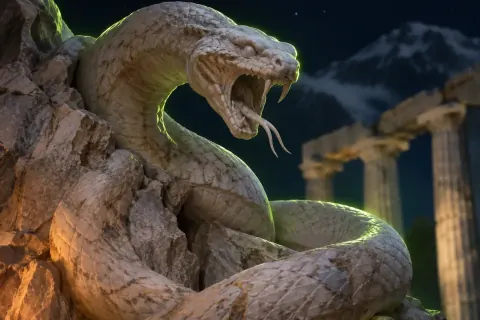
A huge serpent born of the Earth that haunted Mount Parnassus. After Apollo shot it, the priestess at Delphi was called the Pythia. Pythons take their name from it.

Pythia

Pythia皮提亚

Priestess of Delphi

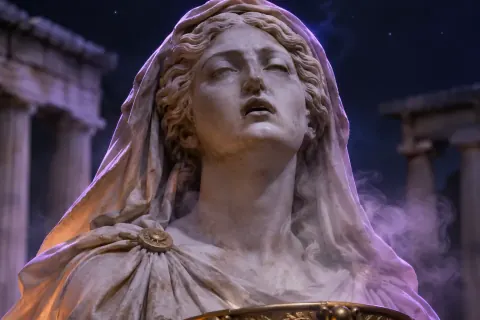
Seated on a tripod, she spoke Apollo's oracles in a state of possession. Her answers were famously ambiguous, yet they swayed the wars and colonies of countless cities.
Daphne

Daphne达芙妮

A river-god's daughter

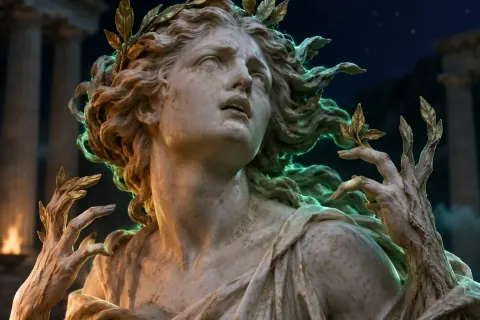
A nymph sworn never to marry. When Apollo had all but caught her, she begged her father to change her, and became a laurel tree.
Marsyas

Marsyas玛耳绪阿斯

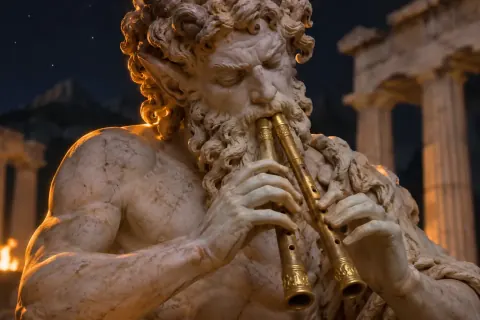
A satyr who played the double pipes

He picked up the pipes Athena had thrown away, mastered them, and challenged Apollo — a classic Greek lesson in the price of hubris.

Hyacinthus

Hyacinthus许阿铿托斯

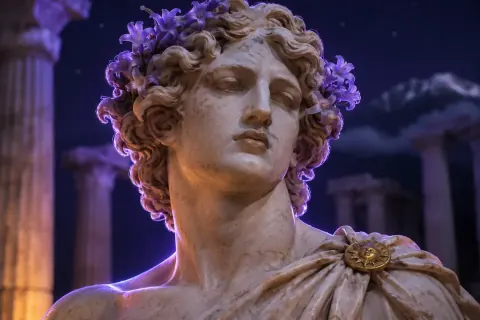
A Spartan youth · beloved of Apollo

Killed by a discus while playing with Apollo — some say the jealous West Wind blew it off course. The hyacinth sprang from his blood.
Actaeon

Actaeon阿克泰翁

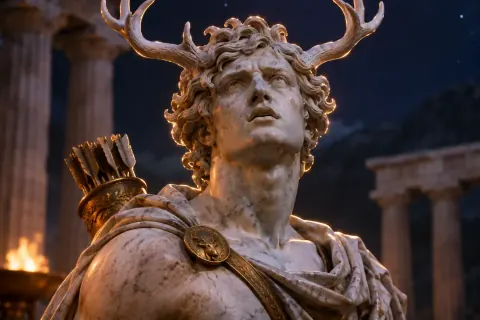
A hunter of Thebes

A fine hunter trained by the centaur Chiron. For seeing Artemis bathe he was turned into a stag and killed by his own hounds.
Orion

Orion俄里翁

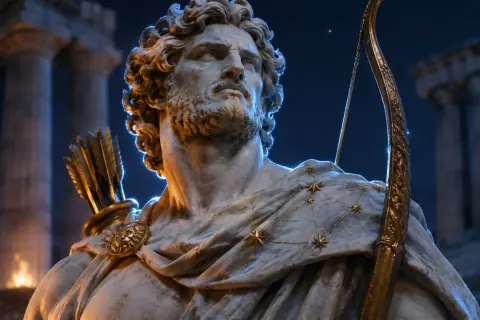
The giant hunter

A handsome giant who could walk on the sea. After his death he was set in the sky as Orion, the brightest constellation of winter.
Agamemnon

Agamemnon阿伽门农

King of Mycenae · leader of the Greeks at Troy

To get his fleet to sea he sacrificed his own daughter. Ten years later he came home in triumph and was murdered in his bath by his wife Clytemnestra.
Iphigenia

Iphigenia伊菲革涅亚

Daughter of Agamemnon

Lured to Aulis with the promise of marriage to Achilles, she was led to the altar instead. One version has Artemis rescue her and make her a priestess in a distant land.

Aloadae

Aloadae阿洛阿代兄弟

The giant brothers Otus and Ephialtes

Twin giants who grew taller every year. They piled mountain on mountain to storm heaven and imprisoned Ares, until Artemis tricked them into spearing each other.

Diomedes

Diomedes狄俄墨得斯

King of Argos · Greek hero

One of the fiercest fighters at Troy. With Athena behind him he wounded two gods in a single day — Aphrodite and Ares.

Achilles

Achilles阿喀琉斯

The greatest warrior at Troy

Son of Thetis, who dipped him in the Styx holding him by the heel — so he was invulnerable everywhere but there. The Iliad is the story of his anger.
Paris

Paris帕里斯

Prince of Troy

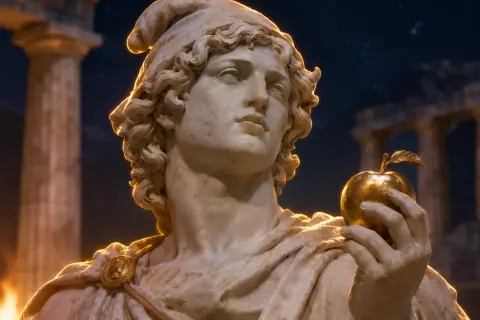
He judged the contest of the golden apple, gave it to Aphrodite, and carried off Helen, starting the Trojan War. In the end his arrow killed Achilles.

Laomedon

Laomedon拉俄墨冬

King of Troy

Grandfather of Paris and a notorious cheat: he refused to pay Poseidon and Apollo their wages, later cheated Heracles too, and died for it.

Anchises

Anchises安喀塞斯

A Trojan prince and herdsman

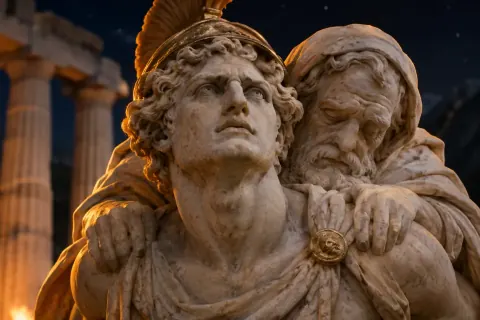
The mortal lover of Aphrodite. On the night Troy fell, his son Aeneas carried the old man out of the flames on his back.

Aeneas

Aeneas埃涅阿斯

Trojan hero · ancestor of the Romans

Son of Aphrodite and Anchises. After Troy fell he led the survivors to Italy, where his descendants founded Rome — the story of Virgil's Aeneid.

Romulus

Romulus罗慕路斯

Founder of Rome

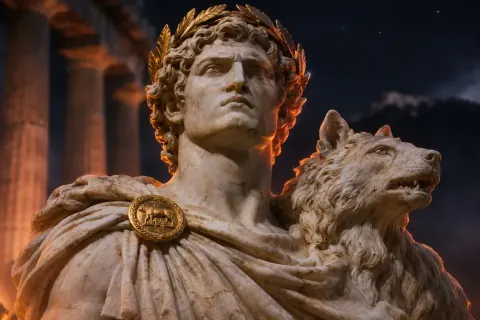
One of twins born to the war-god and a priestess, abandoned as a baby and suckled by a she-wolf. He killed his brother Remus and founded the city that bears his name.
Adonis

Adonis阿多尼斯

A youth of matchless beauty

Born from a myrrh tree. Both Aphrodite and Persephone loved him, and Zeus ruled that he divide each year between them.
Pygmalion

Pygmalion皮格马利翁

A sculptor of Cyprus

Weary of real women, he fell in love with his own work. The "Pygmalion effect" — expectations becoming reality — is named after him.
Orpheus

Orpheus俄耳甫斯

The greatest of singers

His music tamed beasts and made stones weep. He went down to bring back his dead wife on condition he not look back — and looked back at the last step.
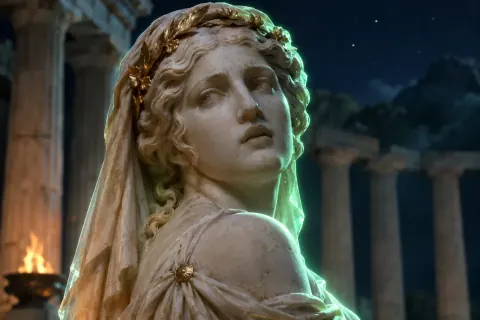
Eurydice

Eurydice欧律狄刻

Wife of Orpheus

Killed by a snakebite soon after her wedding. Her husband almost led her out of the underworld, and lost her a second time with one backward glance.
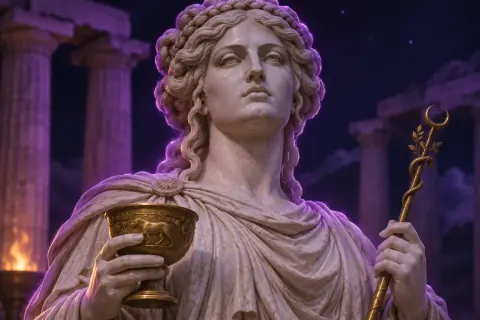
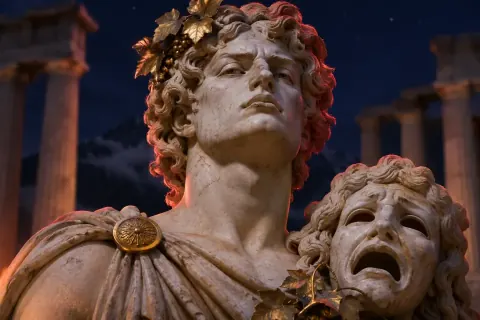
Circe

Circe喀耳刻

The witch of Aeaea

Daughter of the Sun and mistress of potions, she turned Odysseus's crew into pigs. He broke her spell with a herb from Hermes — and then stayed a year on her island.

Pentheus

Pentheus彭透斯

King of Thebes

Nephew of Semele and cousin of Dionysus. He refused to accept the god's divinity, and his fate is the subject of Euripides' tragedy The Bacchae.

Ino

Ino伊诺

Sister of Semele

She took in the infant Dionysus, and for that Hera drove her mad; she leapt into the sea with her son. She became the sea-goddess Leucothea, who later saved the shipwrecked Odysseus.

Ariadne

Ariadne阿里阿德涅

Princess of Crete

Daughter of Minos. She gave Theseus the ball of thread that let him find his way back out of the labyrinth, and later became the wife of Dionysus.

Theseus

Theseus忒修斯

Hero-king of Athens

He volunteered as tribute to Crete and killed the Minotaur in the labyrinth. Hippolytus was his son.
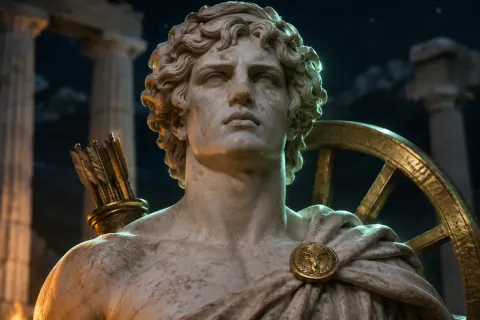
Hippolytus

Hippolytus希波吕托斯

Son of Theseus

A youth devoted to hunting and chastity. When he rejected his stepmother Phaedra she accused him falsely, and his father's curse had him dragged to death by his own horses.
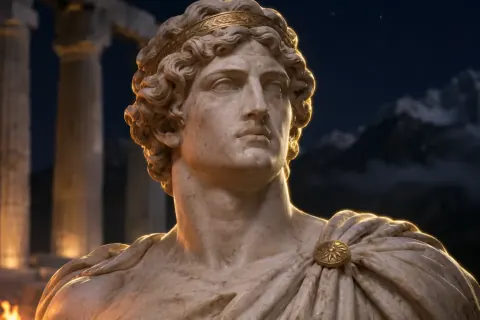
Admetus

Admetus阿德墨托斯

A king in Thessaly

He treated the exiled Apollo so well that the god won him a privilege: when his time came, someone else could die for him. Only his wife Alcestis was willing.
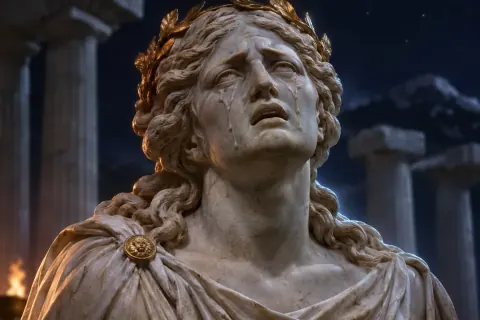
Niobe

Niobe尼俄柏

Queen of Thebes

She boasted of her many children and lost them all. She wept without end until she turned into a rock that still sheds tears.
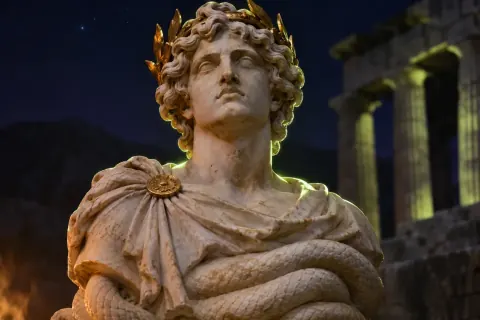
Erichthonius

Erichthonius厄里克托尼俄斯

An early king of Athens

A child born from the earth, part man and part serpent, raised in secret by Athena in a chest. Through him the Athenians claimed to be sprung from their own soil.
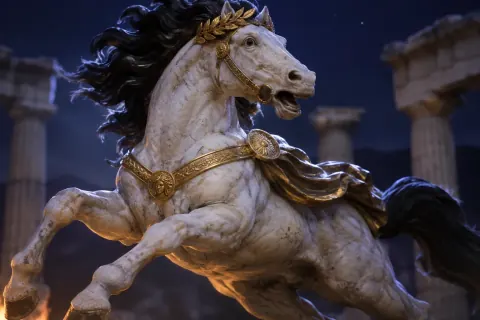
Arion

Arion阿里翁

The talking horse

Offspring of Poseidon and Demeter, swift as the wind, and later the mount of several heroes.